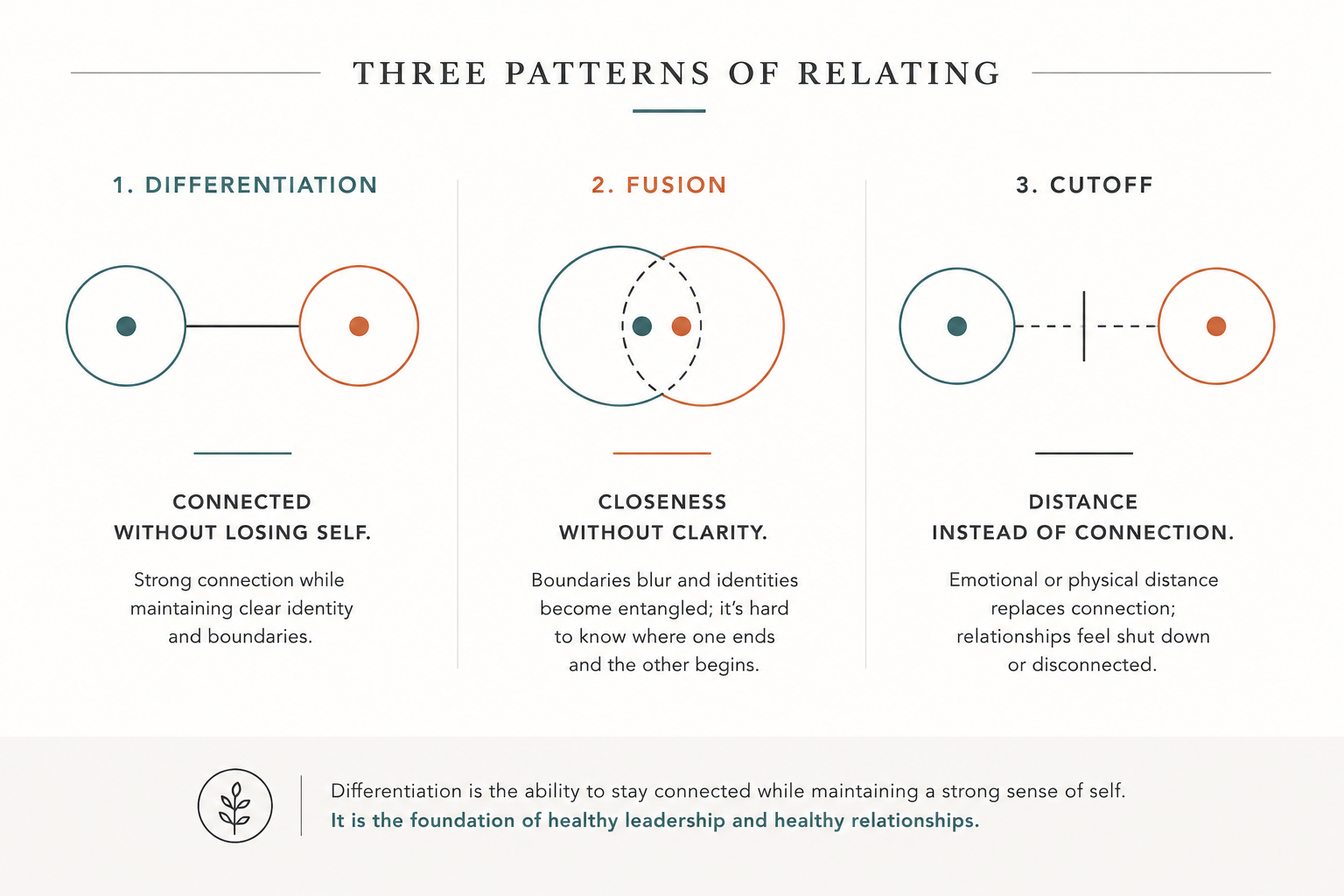
A Self-Differentiated Leader
Here is a refined, higher-impact version of your text. It enhances the flow, adds key quotes from prominent leadership and family systems thinkers (Edwin Friedman, Murray Bowen, and Ronald Heifetz), and tightens the core message.
Spend enough time with executive teams in healthcare, higher education, or K–12 systems and a subtle truth emerges: the hardest leadership challenges are rarely technical. As leadership expert Ronald Heifetz famously observed, "Adaptive challenges require changes in people's priorities, beliefs, habits, and loyalties." Most executives already know what needs to be done on paper. The real challenge is leading through the crosscurrents of competing interests, finite resources, and heightened emotions.
In these high-stakes environments, self-differentiation is the single most overlooked capacity for turning leadership burnout into renewed momentum.
Coined by psychiatrist Murray Bowen and later adapted for organizational leadership by Edwin Friedman, self-differentiation is the art of staying grounded. Friedman described it best: "Self-differentiation is the capacity of a leader to define his or her own goals and values while staying in connection with others."
A self-differentiated leader maintains clarity under pressure. They don't absorb every spike of anxiety in the room, nor do they emotionally withdraw to preserve peace. They stay genuinely connected while remaining rooted in their principles. They can hold difficult conversations without defensiveness, make unpopular calls without craving universal validation, and project steady anchor-points when others react in panic.
In complex institutions, leaders instinctively hunt for strategic breakthroughs. Strategy matters. So do structure, operational systems, and execution. Yet as Peter Drucker famously noted, "Culture eats strategy for breakfast" and organizational culture is ultimately driven by the emotional maturity of its leadership. Every strategy rises or falls on the calm, clear presence of the people executing it.
Developing self-differentiation isn't about becoming detached, aloof, or less empathetic. It is about expanding your capacity to think clearly and act thoughtfully when the stakes couldn't be higher.
We believe that in the pivotal moments that define executive leadership, your greatest asset isn't simply what you know, it's who you are when everyone else is looking to you for direction.